



Thermal insulation
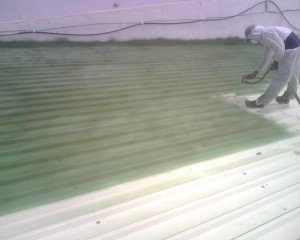
Of all the properties of PAYMO® , backed by our experience and by laboratory tests, we want to take a closer look at thermal insulation and energy savings.
The thermal conductivity coefficients (lambda) are fixed for each type of material, insulating or not, and allow us to calculate theoretically the thermal insulation that can be achieved using a given material.
As an example, we will list some of them, stressing that the lower the lambda, the better the thermal insulator the material is:
- Compact rock 3.00 Kcal. /h m C
- Porous rock 2.00
- Cement render 1.20
- Plaster render 0.26
- Solid brick 0.75
- Perforated brick 0.65
- Plasterboard 0.16
- Plaster board 0.26
- Sheet glass 0.82
- Sheet steel 50.0
- Copper 330.0
- Aluminium 175.0
- Pine or fir wood 0.12
- Chipboard 0.07 Kcal. /h m C
- Carpet 0.04
- Asphalt felt 0.16
- Expanded clay 0.09
- Glass wool 0.032
- Rock wool 0.034
- Expanded polystyrene 0.038
- Extruded polystyrene 0.028
- Polyurethane boards 0.020
- Sprayed polyurethane 0.020
- Cork 0.034
The lambda coefficient depends on the material and is independent of thickness. Using the tabulated lambda value, the thermal transmission coefficient of heat is calculated theoretically K (Kcal. /h m2 C) with the following formula:
1
K= —————————-
1 Si
—————— + ——————
a Lambda i
Where:
a = surface heat transmission coefficient, which is a constant value equal to 5 (1/a = 0.2)
Si= thickness in metres of each component (example: render + bricks + insulation + bricks + render)
Lambda i= thermal conductivity coefficient of each component
Once the thermal transmission coefficient of heat has been calculated K , the heat flow can be calculated Q (Fourier's law) with the formula:
Q = K x S x (Ti – Te) in Kcal. /h
Where:
K = Thermal transmission coefficient
S = Wall surface area in m2
Ti = Indoor temperature
Te = Outdoor temperature
The heat flow Q tells us how much heat passes per unit of time (one hour) from the inside to the outside over a surface S .
Once this value is obtained (which could be negative, in which case we speak of kilo-frigories /h), the useful power of an air-conditioning unit or heater can be calculated to obtain and maintain a healthy and comfortable environment.
Pu = Q + 0,29 V x (Ti – Te)
Where V is the minimum volume of renewal air needed to keep the environment healthy.
The actual power to be installed is the result of multiplying this useful power by 1.2 in the case of continuous heating (k calories) or cooling (k frigories) and by 1.5 in the case of intermittent heating or cooling.
The values of V are tabulated; we list some of them (m3/hour per person)
Minimum Recommended
Banks 1.8 3.5
Bar 4.5 7.0
Schools 10.0 20.0
Factories 1.3 1.8
Hospitals 4.5 5.5
Restaurants 2.0 2.5
Theatres and cinemas 1.0 1.3
Apartments 1.0 1.3
Garages 1.0 1.3
Supermarkets 1.0 1.3
According to theory, in general the following are required:
A. A material with a low thermal conductivity coefficient (lambda) and an equally low thermal transmission coefficient K
B. A low heat flow Q in order to save energy for heating or cooling the environment; for the same surface area and K, a small temperature difference between inside and outside is also needed.
C. Breathability of the various materials making up the assembly (for example a wall) to allow the necessary air exchange, so that the environment is healthy, free of damp or condensation, and comfortable in general.
All of the above is valid for every material except one:
Cork and PAYMO® (96% cork by volume).
PAYMO® is the only insulating material ( cork is the best natural thermal insulator ) that has a variable lambda thermal conductivity coefficient.
For a temperature range (between 10 and 40 C), certified laboratory tests give us a 28% reduction in lambda compared with the standard value.
Thermal insulation company
PAYMO® is the only insulating material with a peculiar property: whatever the outside temperature, the body of PAYMO® will have a temperature that never drops below 0 C and never rises above 35 C , so the heat flow Q , which depends directly on the temperature difference between inside and outside, falls notably.
For example: a temperature of 80 degrees on a metal sheet roof of an industrial building should be considered as a maximum of 30/35 degrees, which will be the temperature of the body of PAYMO® . With an outside temperature of 25 degrees and an inside temperature of 22 degrees, the temperature difference for calculating Q , will not be 47 degrees but 22 degrees, because the body of PAYMO® will never drop below 0 degrees and will not rise above 25 degrees.
It can be stated without any doubt that a thickness of PAYMO® of 3 millimetres is more than enough to obtain the necessary insulation, roughly equivalent to 1.5 or 2 centimetres thickness of any other insulator (for example polyurethane).
A thickness of 3.3 millimetres of PAYMO® can reduce the actual power to be installed to obtain a healthy and comfortable environment without condensation and damp by up to 40% compared with the actual power calculated for other insulating materials using the traditional method (Lambda, K, Q, Pu, P).
